
You invested time and money in your dental implants. They were supposed to last. But now something feels off. Your bridge is loose. You hear clicking when you chew. Or maybe you have noticed swelling or a bad taste near the implant site. These aren’t signs to ignore.
If your multi-unit implant bridge is failing, you aren’t alone. While dental implants have a success rate of over 95%, failures do happen. The good news is that many failing implant bridges can be salvaged. The key is understanding what went wrong and working with the right team to fix it.
At Cosmetic & Advanced Dentistry in Owings Mills, Dr. Ed Lazer and Dr. Andrey Doroshenko specialize in complex implant cases, including diagnosing and treating failing implant bridges. They work as a coordinated team, combining surgical precision with aesthetic artistry to restore your smile. We proudly serve patients from Baltimore, Towson, Hunt Valley, and the surrounding communities.
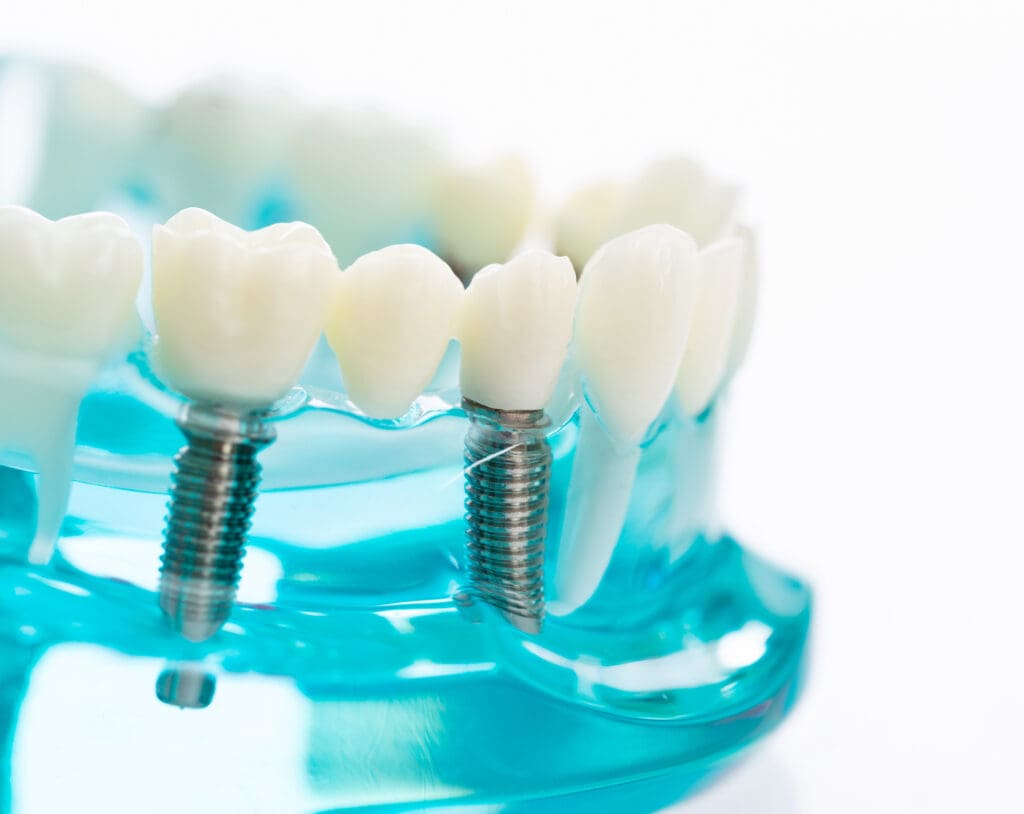
Why Do Multi-Unit Implant Bridges Fail?
Several reasons can cause an implant-supported bridge to fail. Understanding the cause is the first step toward finding a solution.
Mechanical Failures
Mechanical complications are among the most common reasons for implant bridge failure. These include:
- Prosthetic screw loosening or fracture: The small screws that hold your bridge to the implants can loosen over time or even break. This happens because chewing forces exceed what the components can handle.
- Fracture of the bridge itself: The materials used for the bridge can crack or break, especially if you grind your teeth or chew very hard foods.
- Abutment or implant fracture: In more severe cases, the abutment (the connector piece) or even the implant post itself can break.
Biological Failures
Biological failures are related to the health of the tissue around your implants. The most common biological cause is:
- Peri-implantitis: A bacterial infection of the gum tissue and bone surrounding an implant. It’s structurally similar to gum disease (periodontitis) in natural teeth, but it progresses faster and is more destructive. This is because implants lack the periodontal ligament that provides a biological buffer against bacterial invasion in natural teeth.
- Peri-implant mucositis: This is the earlier, reversible stage of infection where inflammation is confined to the soft tissue (gum) around the implant. If caught and treated at this stage, the implant can be saved.
Excessive Force
Excessive occlusal (chewing) force is a major contributor to both mechanical and biological failures. When a bridge is supported by too few implants for the forces applied, it can lead to:
- Overloading of individual implants: This can cause bone loss around the implant, implant loosening, or even fracture of implant components. One case report described a patient whose implant bridge became loose because the back implant failed and the abutment snapped from heavy chewing.
- Twisting forces: When you bite down on one end of a bridge, it can create a twisting force on the implants at the other end. This type of force is particularly damaging and can lead to mechanical failure.
Signs Your Implant Bridge May Be Failing
What should you look for? Here are common warning signs:
- A loose or shifting bridge: This is the first sign of a problem. It may feel like your bridge is moving when you bite or chew.
- Pain or discomfort: You may experience pain when chewing or even at rest.
- Swelling, redness, or bleeding: These can indicate infection around the implants.
- A bad taste or odor: This can indicate an infection.
- Gum recession: The gum tissue around the implant may pull back, exposing the implant post.
- Clicking or popping sounds: These can indicate a loose abutment or a problem with the bridge.
If you experience any of these signs, see your dentist as soon as possible.
What Happens During an Evaluation?
When you come to Cosmetic & Advanced Dentistry with a suspected failing implant bridge, Dr. Doroshenko will perform a thorough evaluation. This typically includes:
- A clinical exam: He will check the bridge’s stability, assess your gum health, and look for signs of infection.
- Radiographic assessment: We will take X-rays to evaluate the bone around your implants and check for any fractures or other issues.
- Assessment of the bridge components: In some cases, we may remove the bridge to inspect the abutments and screws.
Salvage Options for Failing Implant Bridges
Depending on the cause and extent of the failure, several salvage options may be available.
1. Refurbishing the Bridge
If the failure is primarily mechanical, such as a broken acrylic tooth or a fractured portion of the bridge, the bridge itself can sometimes be repaired. This less invasive option can extend your restoration’s life. In one case, a 90-year-old patient had her 26-year-old implant bridge refurbished, allowing her to continue eating nuts without worry.
2. Replacing Broken Components
If a prosthetic screw or abutment breaks, you may be able to remove the damaged component and replace it with a new one. This approach can be successful if the implant itself is still healthy and integrated with the bone.
3. Treating Peri-Implantitis
If peri-implantitis caused the failure, treatment will focus on controlling the infection. This may involve:
- Professional cleaning: The implant surfaces will be debrided to remove plaque and calculus.
- Antimicrobial therapy: This may involve antibiotics or antimicrobial mouth rinses.
- Surgical intervention: In more advanced cases, surgery may be necessary to access and clean the area, and possibly to regenerate lost bone.
4. Replacing the Bridge and/or Implants
If the bridge is severely damaged or the implants are failing, the best option may be to remove the bridge. In some cases, we may remove the implants themselves. After healing, we can place a new bridge or new implants.
Learn more about our implant services:
- Dental Implants in Baltimore, MD
- Dental Implants near Greenspring, MD
- Dental Implants near Hunt Valley, MD
- Dental Implants near Timonium, MD
- Dental Implants near Towson, MD
- All-on-4 Implants
- Benefits of Dental Implants
- Cost of Dental Implants
- Dental Implant FAQs
- Dental Implants vs Dentures
- Multiple Dental Implants
- Single-tooth Dental Implant
- Types of Dental Implants
The Cosmetic & Advanced Difference
At Cosmetic & Advanced Dentistry, we specialize in complex implant cases. Dr. Doroshenko is a prosthodontist with advanced training in implant surgery and restoration. Dr. Lazer is a nationally recognized cosmetic dentist who ensures your new smile is not only functional but also looks great!
We handle every step of the process in our Owings Mills office, from diagnosis to treatment and final restoration. This integrated approach is what sets us apart.
If you are concerned about a failing implant bridge, don’t wait to visit us. Contact our Owings Mills office today at (410) 697-6290 to schedule a consultation. You can also request an appointment online.