
Save your natural tooth with endodontic microsurgery. When a standard root canal isn’t enough to save a tooth, you have a choice: extract the tooth or try to save it with an apicoectomy.
At Cosmetic & Advanced Dentistry in Owings Mills, we don’t give up on natural teeth. Our team, led by a prosthodontist and cosmetic dentist, offers apicoectomy. The procedure is a precise, microsurgical treatment designed to eliminate infection at the root tip and preserve your smile.
For a free consultation, call us today at (410) 697-6290 to see if you are a candidate.
What Is an Apicoectomy? (Root-End Surgery)
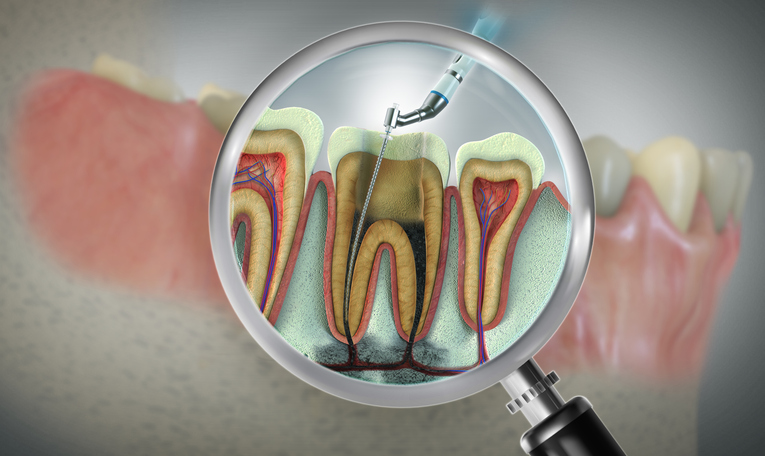
An apicoectomy is a minor surgical procedure performed on a tooth that has already had a root canal but remains infected. Think of it as a “root canal from the outside.”
In a standard root canal, the dentist cleans the inside of the tooth. In an apicoectomy, we access the tip of the root through the gum, remove the infected tip, and seal the end to prevent bacteria from re-entering.
Why is it called a root-end resection? “Apico-” refers to the apex (tip) of the root, and “-ectomy” means removal. We are literally removing the tiny infected tip of the root to save the rest of the tooth.
Why Would I Need an Apicoectomy?
Root canal treatments have a high success rate (85-97%). However, sometimes anatomy gets in the way. You might need an apicoectomy if:
- Complex Root Anatomy: Your tooth has tiny, curved, or extra canals that a standard cleaning couldn’t reach.
- Persistent Infection: An abscess or cyst remains at the root tip despite a properly performed root canal.
- Calcified Canals: The root canal is blocked by calcium deposits, making it impossible to re-treat from the inside.
- Existing Restorations: Your tooth has an implant post or dental crown, which makes redoing the root canal risky to the tooth structure.
The Cosmetic & Advanced Difference: Why Choose Us?
At Cosmetic & Advanced Dentistry, we treat the entire tooth, not just the infection. Because we have a prosthodontist (Dr. Doroshenko) and a cosmetic dentist (Dr. Lazer) on-site, your surgical success is paired with aesthetic consideration.
- Precision Technology: We use surgical microscopes and ultrasonic instruments to ensure the procedure is minimally invasive and highly accurate.
- Specialist Expertise: Our team has advanced training in the complex anatomy of the jaw, including its proximity to nerves and sinuses, ensuring your safety.
- One-Stop Care: From the surgery to the final restoration (crown), you never have to leave our Owings Mills office.
The Procedure: What to Expect
We know surgery sounds scary, but an apicoectomy is an outpatient procedure performed right here in our Baltimore dental office.
- Numbing & Comfort: Dr. Ali Eghtesadi will completely numb the area. We also offer sedation options if you feel anxious about the procedure.
- Access: A small incision is made in the gum tissue to expose the underlying bone and root tip.
- Removal: The infected root tip (usually the last 2-3 millimeters) is removed. An ultrasonic instrument cleans the area thoroughly.
- Sealing: A tiny biocompatible filling is placed to seal the end of the root canal, preventing re-infection.
- Sutures: The gum is stitched back into place. The procedure typically lasts 30 to 90 minutes.
Recovery Time & Aftercare
Apicoectomy recovery is generally quick and manageable.
- Immediately After: You may experience mild swelling or bruising, similar to having a wisdom tooth removed. This usually peaks on day two and subsides within a week.
- Pain Management: Over-the-counter pain relievers (like ibuprofen) are usually sufficient to keep you comfortable.
- Diet: Stick to soft foods for a few days and avoid chewing on the side of the surgery.
- Oral Hygiene: Keep the area clean. Your dentist may recommend a warm salt water rinse (do not spit forcefully).
- Return to Work: Most patients return to normal activities within 1 to 2 days.
Apicoectomy vs. Extraction: A Critical Decision
If your root canal has failed, you really have two paths. One saves your natural tooth. The other removes it and starts over.
Choosing an Apicoectomy (Saving Your Tooth)
An apicoectomy preserves your natural tooth. That means you preserve your natural bite and avoid the domino effect that often follows an extraction. There’s no follow-up procedure needed, so you’re done once you heal.
The cost is a one-time surgery fee, usually partially covered by insurance. Recovery involves mild swelling for a few days, but you keep your smile intact.
Choosing Extraction (Removing the Tooth)
Extraction removes the infection by removing the entire tooth. But that creates a new problem. Now you have a gap. To fix that gap, you’ll need either a dental implant (which requires surgery and months of healing) or a bridge (which requires grinding down healthy adjacent teeth).
Either way, you’re looking at thousands of additional dollars and multiple appointments. Recovery from extraction plus implant surgery can take months, not days.
Our recommendation
We always prefer to save your natural tooth whenever possible. An apicoectomy allows you to keep your natural bite and avoids the need for more expensive, more invasive procedures down the road. If we can save it, we will.
Success Rates & Risks
Modern apicoectomy techniques achieve high success rates. Studies show success rates ranging from 85% to 97% when performed with a microscope and modern materials.
As with any surgery, there are minor risks such as infection, bleeding, or nerve irritation (usually temporary). However, complications are rare when the procedure is performed by an experienced provider.